St Martin's Theatre
At this venue:
 Use Theatre Tokens
Buy Theatre Tokens
Use online
How to use your Theatre Tokens:
 officiallondontheatre.com/venue/st-martins-theatre
 020 7836 1443
Please note that both the phone number and venue website will connect you to one of our trusted partners. While Theatre Tokens does not manage the booking service or phone lines, we understand that theatres can be busy, and we appreciate your patience with any delays. Thank you for your understanding.

Include this theatre in your What's On emails by adding it to your favourite locations.
Access info:
What’s on
Venue information
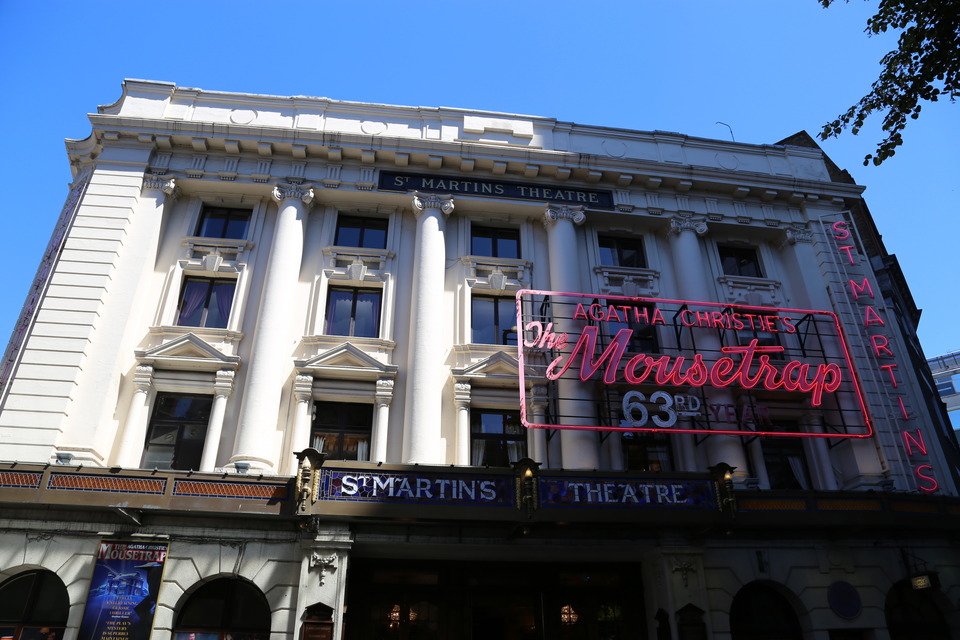
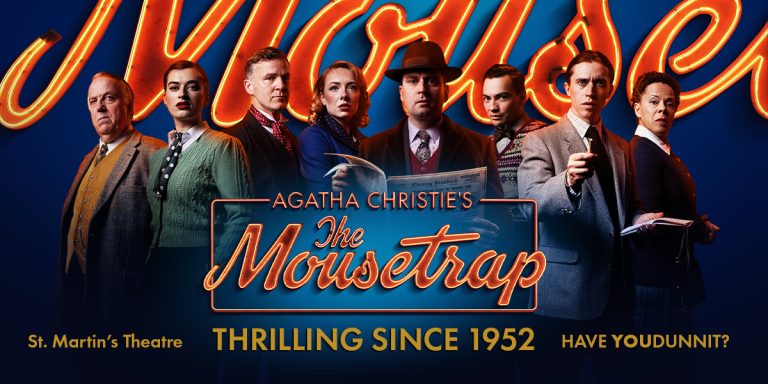
The St Martin’s Theatre was designed by the famous West End architect, W.G.R. Sprague, to be one of a pair of theatres with the Ambassadors Theatre, situated next door. The theatre is famously associated with the longest-running show in the world, Agatha Christie’s The Mousetrap, which has been running in the West End for over six decades. It was transferred over to the St Martin’s in 1974 having originally opened at its sister venue, The Ambassadors Theatre, over twenty years earlier.
After its construction being delayed by the First World War, the St. Martin’s Theatre opened in 1916, and has been the home to a multitude of thrillers and comedies. Many of the British acting elite have graced the stage of the St Martin’s, including Basil Rathbone, who played Harry Domain in R.U.R., and Henry Daniell who appeared there as Gregory Brown in Meet The Wife in 1927.
Located at the heart of London’s West End and close to Leicester Square underground station, St. Martin’s Theatre holds a prime position within the city’s famous theatre area. It has an intimate atmosphere which have suited it to the niche comedies and thrillers it has hosted, with the auditorium having a relatively modest capacity of 550. Its original design was commissioned by Richard Verney, the Baron Willoughby de Broke, and B.A. Myer. Even in recent years, the theatre is partially owned by the present Lord Willoughby de Broke.
The theatre was Grade II listed by English Heritage in March 1973, which protects it for being a site of cultural and architectural significance to the British public and prevents any demolishment of the building, or repurposing of its site.